Sunday, November 13, 2011

The view from a Northern California goat dairy

Today marks one week since I started work at Toluma Farms, a small goat dairy in Marin County (a mere 5 minutes from the Pacific Ocean).  Marin County is an hour northwest of San Francisco and fast becoming a "foodie" haven, where folks attracted to locally sourced food can find it in variety and abundance. The region has a long history of dairying due to it's mild weather and abundant pastures; it is host to many small scale farms which are still making livings in cow/goat/sheep dairying and cheese-making businesses today. 

Toluma Farms is currently selling bulk milk to other producers but plans are in motion to start making and selling artisan cheese in 2012. Here is a quick tour around the farm.

Coastal morning fog

Home uh, sweet, home

The milking parlor and grain tank

The soon to be converted creamery

The goat barn

The kids - replacement does

The morning commute - up the hill for fresh air after milking

The sheep love to tag along

Kids solving their arguments

In coming weeks I'll detail tasks and chores that go into operating a goat dairy. It has been a whirlwind change from working full time in an office and I am looking forward to sharing it with you!

Tuesday, November 8, 2011

Dairy Sheep Mania


This past weekend I had the opportunity to attend the 17th Annual Dairy Sheep Symposium. For the first time ever the Symposium was held on the West Coast, in Petaluma, California (lucky us!) There were easily over a hundred people at the conference and plenty who couldn't make the trip…it is surprising to see how many people are interested in this sheep milking/cheese making niche!

There were two days of conference-like activity, with various speakers and discussions ranging from mobile milking parlors, to artificial insemination of dairy sheep, to cheese making and marketing information, to results of scientific research projects related to dairy sheep. Included was a cheese tasting, where many attendees brought their wares to sample, as well as a banquet featuring local lamb.

An ewe being inseminated in the "cradle of love"

The symposium also included a day of touring three local sheep dairies; Marin and Sonoma counties have a “Cheese Trail” and the largest (growing) concentration of artisan cheese makers in California. We first visited Bellwether Farm and Artisan Creamery, which produces several sheep milk cheeses, sheep milk yogurt and cow’s milk cheese.

Bellwether's ewe lambs

Bellwether's cheese aging room

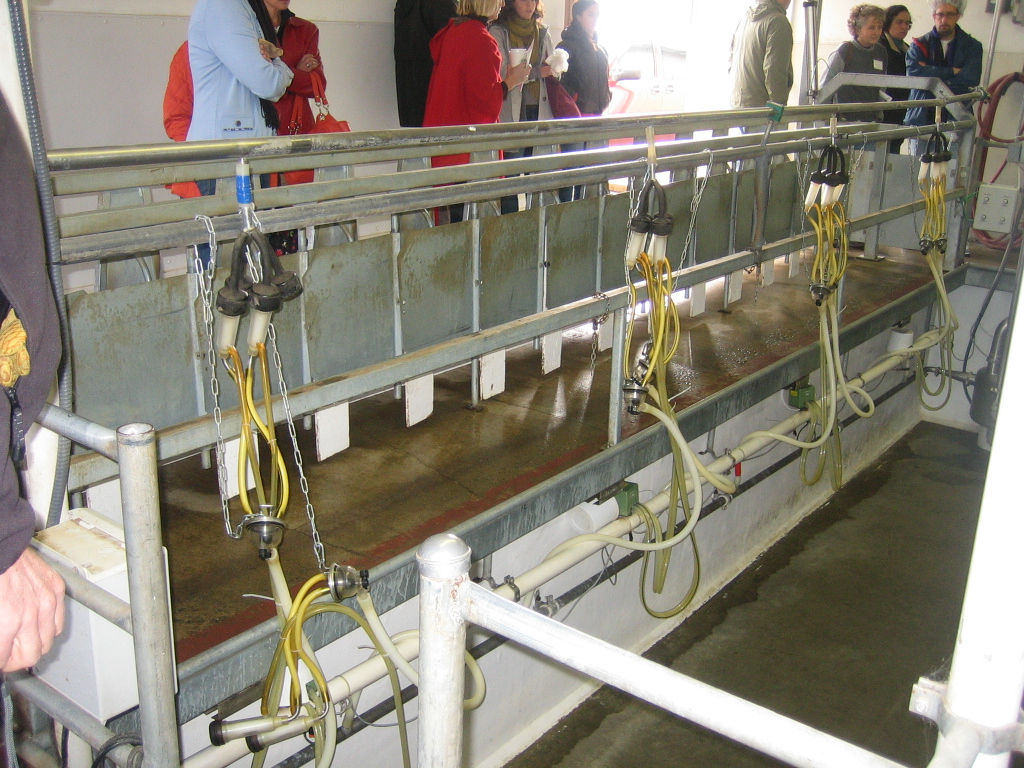
Bellwether's milking parlor - this is where milk comes from!

We then stopped by Haverton Hill, where they have high tech electronic ear tags for all the sheep that sync to electronic milking equipment; all the milking stats for each sheep is sent directly to a computer for ease of tracking and decision making. 


The last farm we visited was Weirauch Creamery, one of the newest in the area. The owners have converted an old portable classroom into their creamery and are in the process of converting another into their milking parlor.


Their small pasteurizer and cheese vat

To be honest, the more I heard and saw at this symposium, the more overwhelmed I felt. Sheep dairying and cheese making is far from an easy or cheap profession to get into. It seems to me that there are three way’s a person gets into it – by inheriting a working dairy, by having a large amount of off farm income to dump into starting a dairy, or - for those with neither of those options - by going into substantial debt to follow an internal passion.

Everywhere I look, small farmers face massive challenges to start and sustain their farms. I wonder why is farming on a small scale is so unrealistic? Perhaps we are not placing enough value on what we eat. Agriculture should be what sustains our communities and creates health for us and our environment.  Small, local farms are an incredibly important piece of our "green" future and deserve our support.

Saturday, October 29, 2011

Sheep dog days

Last weekend we skipped selling lamb and beef at the farmer's market in order to attend a day of border collie school with Ellen Skillings, a skilled trainer. Border collies are energy filled, work oriented dogs. They have been bred over the past several hundred years to subdue their wolf-ancestors kill instinct and to gather flocks of sheep towards their handler (called fetching); most other breeds of dogs will drive flocks away.

Border collies control sheep with what is called "eye;" essentially an intimidating stare straight at the animal as well as a lowered stance - a dog with a strong eye can get stock turned around and moving without any other force. If the eye isn’t working on a particularly stubborn sheep, the dog will escalate its use of force by nipping at the sheep's heels and a confident dog will “grip” the sheep, giving it a bit on its nose to get it moving. It takes a lot more confidence to grip a sheep head on, rather than go for an easy bite on the flank!

The leisurely life of a BC pup

Border collie puppies aren't necessarily very interested in stock - as they get older most will "turn on" to stock and enjoy chasing, scattering and herding animals with out any direction from their handler. This is the point that training really starts, in short sessions once or twice a day. They will eventually learn commands like "come by" (go left to fetch the sheep),  "away" or "away to me" (go right to fetch the sheep), "walk on" (move slowly straight ahead) and "lie down" (meaning stop right there).


Because of their intelligence, great desire to work and extremely high energy levels, border collies do not make good pets for people who aren’t willing to spend several hours a day physically and mentally challenging them. Border collies do make great partners for shepherds, farmers and dog trainers who have stimulating work for the dogs to do. From watching and listening during the training, it is easy to see that there is a trusting relationship that handlers must build with their dog. Once that relationship is established on both sides, I think a better buddy, partner or employee would be hard to find.


Monday, October 24, 2011

Fall in the Foothills


Between preparing to leave for my internship on a goat dairy, working a desk job, interning on a farm Saturdays, planning my wedding and making and eating desserts, I find myself falling a little behind on my posts. But this one is still timely...


With the popularity of snapping photos of children wading through fields of fleshy orange orbs, sampling apple cider and spending a crisp fall day on a farm, pumpkin patches around Sacramento have become increasingly urbanized and crowded. While visiting Apple Hill and Bishop's Pumpkin Farm since I was a little girl have provided many happy memories, this year a friend told me about a place I suspected would not have hour long lines of traffic for parking spots a half mile from the farm; a family farm and kitchen in Chicago Park called Bierwagens and the Happy Apple Kitchen.


The Bierwagen family has farmed on this same land since 1902. The farm is cute with festive displays; there are sandboxes filled with hard, yellow corn kernels and little tractors, hay bales to climb on, chickens to cluck at and a pygmy goat that will let you scratch its head and giggle at it. There is also a little museum with family heirlooms and farm equipment on display that is worth a look. They sell fresh cider, plums, pies, caramel apples, tri-tip sandwiches and of course pumpkins of all sizes, shapes and colors.

And one amazing old tree
If you are looking to start a new family tradition or just do something off the well beaten path, the Bierwagen's farm is well worth the trip into the festively decorated foliage of the foothills.

Tuesday, October 11, 2011

From field to fork...

...farm to fork...pasture to plate...no matter how it is dressed up with attractive alliterations, eating meat involves the demise of what is being eaten. It happens all the time, breakfast, lunch and dinner, in the animal kingdom, in the human realm. That most of us are completely removed from any experience of what life and death is like for the meat we eat speaks to the reason we have massive monoculture factory farms in this country. If we knew the whole story of each item of food on our plates, I believe we would make more sustainable, health supporting choices.


Three weeks ago my fiance, Matt, joined Dan (the sheep herder I intern for) and myself on a work day sorting lambs. Matt purchased a market lamb back in May. A market lamb is a sheep that is younger than one year old, generally a castrated male. It could also be a female whose genetics a farmer doesn't want contributing to their future flock. A market lamb is also by definition destined for the dinner table. By late September Matt's lamb weighed 90lbs and was 'finished.' Finish is the amount of fat cover on the animal and is decided most easily by feeling the loin area on each lamb.


We sorted all the lambs; those under 90lbs got to go back out to pasture. Those over 90lbs were loaded in the trailer and taken to the nearest lamb processing facility about 55 miles away in Dixon.

The next week, we picked up our meat, a freezer full and seasons worth of roasts, racks and chops.


It might be crass to show these pictures. But in this case, the truth is a bit crass. The transition of living animal to "meat" is a reality many eaters shy away from. My point is, I know my dinner's story, from when and where it was born, to where it grazed and lived, to where it eventually met its end. I know it had a pleasant life in a sun soaked pasture, plenty to eat and drink and was well cared for. It is also one of the most local and sustainable options I could choose for my dinner. The purchase of this meat will hopefully help a small-scale, local farmer stay in the business of feeding his community.

I realize not everyone cares to be this involved in the preparation of their dinner but I hope you care enough about what you eat to find out where your food is coming from...check out a co-op, visit a farmer's market, join a CSA and ask some questions!


Tuesday, October 4, 2011

Celebrating the change of season - Celtic style

For the second time in as many weeks, we chugged up the Northern California foothills to the woodsy Nevada County Fairgrounds. This time - less equine gentility...more medieval debauchery!


It was the 15th Annual KMVR Celtic Festival and the debauchery was actually pretty minimal (sorry to disappoint). But there was plenty music, full medieval costumes (heaving bosoms and all), period games, sheep dog demos and lots of interesting food. Here's a sample of the sensory stimulating day...

Tempting to spend a small fortune on authentic garb
Unique hats, elf ears, kilts and capes aplenty
The spinners guild - turning wool and roving into yarn!
Music was one of the main attractions of the weekend, with three or four stages going simultaneously.
Whiskey and Stitches
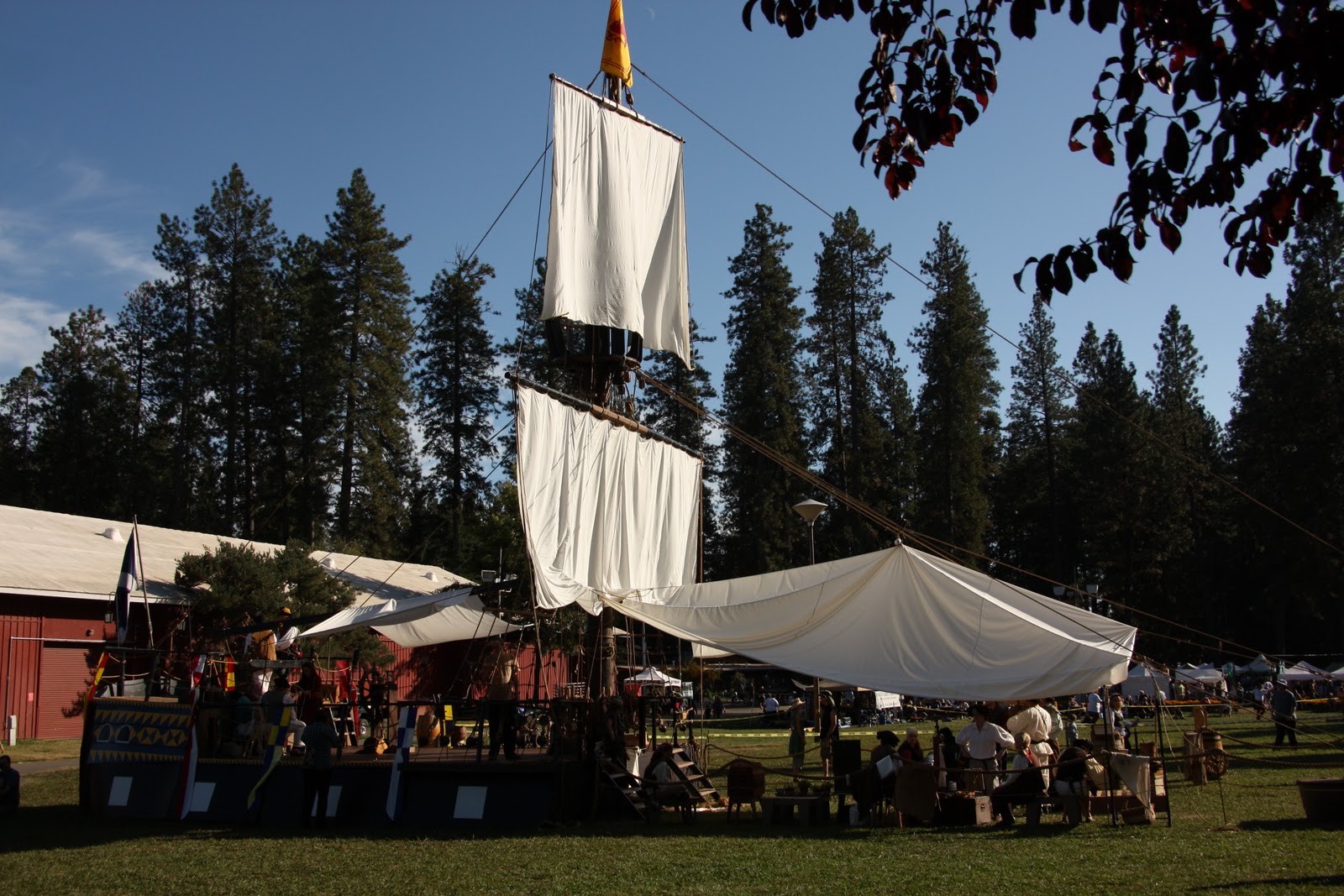
Pirate ship with startling cannon demonstrations
Claude the fire-breathing dragon 
Hand made spoons
Stone engraving
The ultimate contest of grunting manliness - the caber toss
Dan the sheep-herder and Taff doing a herding demo
Sheep-herders pie - I need to learn how to make these!
All in all a pretty good way to usher in the California fall - in a Celtic kind of way!


Tuesday, September 27, 2011

Draft Horses - a classy way to pull your ride


"Land yachting" is the term that came to mind while watching draft horses and fancy wagons compete at the 25th(!) anniversary of the Draft Horse Classic in Grass Valley. Talk about horsepower! These massive, muscular and beautiful animals have largely become obsolete with the invention of railroad, cars, military vehicles and tractors. Those that have taken care to see that draft horse breeds don't disappear use them for different purposes these days, mainly showing them or for pulling contests. They are also still used on some small farms, mostly by the Amish, as an organic and renewable source of power.
Horse shoeing competition


Draft horses were used to deliver daily dairy products!
Part of the appeal is the many restored wagons folks bring to the show.  For the Americana competition there was a hearse, Santa's sleigh (and Santa!), a dusty stagecoach filled with travelers and luggage, a beer delivery wagon, a fire station wagon and more.

The setting of the Nevada County Fair Grounds, recognized as California's most beautiful fairgrounds and the onset of cool fall weather made this an event to remember.
Wishing I had more locally made Lazy Dog ice cream
And a bit of exciting news that is about to change my life...I was chosen for a 6 month internship at Toluma Farms, a goat dairy on the California Coast-I'll be heading there in November!